Transform your single-family home into a multi-generational multiplex under Bill 44. This comprehensive guide covers property valuation, choosing developers, financing options, partnership structures, and everything Vancouver homeowners need to know.
If you own a single-family home in Vancouver and have been thinking about downsizing while staying close to family, building a multiplex on your property may be one of the smartest decisions you can make in 2026. Thanks to BC’s Bill 44 legislation, virtually every former single-family lot in the province can now accommodate 3-6 units, creating unprecedented opportunities for homeowners to unlock their property’s value while keeping multiple generations of family together in the same neighbourhood.
This comprehensive guide walks you through everything you need to know about building your own multiplex—from understanding your property’s development potential to choosing the right builder partnership, navigating financing, and finally moving into your completed multi-generational home.
What is a Multiplex?
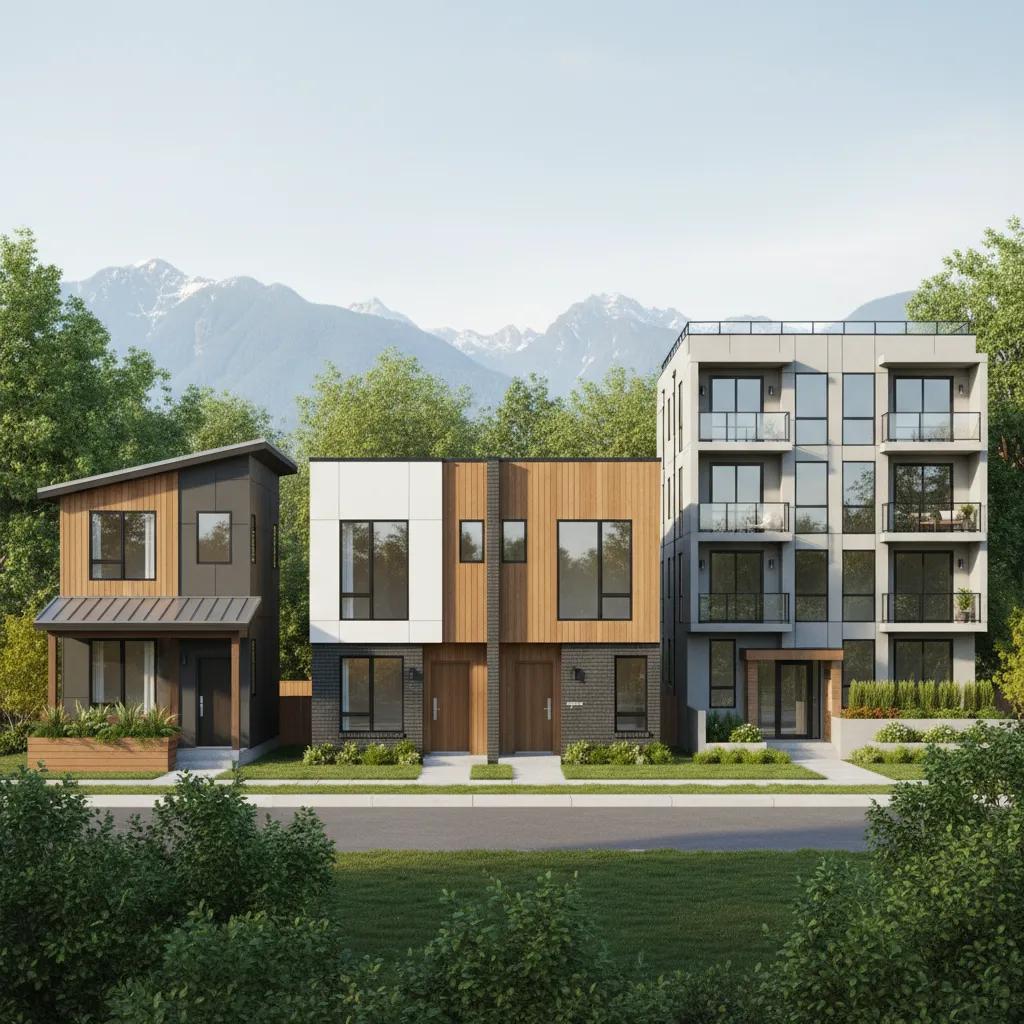
A multiplex is a residential building on a single lot containing multiple separate housing units. This could be a duplex (2 units), triplex (3 units), fourplex (4 units), or larger configurations up to 6 units under BC’s Small-Scale Multi-Unit Housing (SSMUH) framework. Unlike apartment buildings, multiplexes are ground-oriented, human-scale buildings that maintain neighbourhood character while increasing housing density.
Multiplexes can take various forms:
- Side-by-side units: Two or more homes sharing common walls (like a duplex or triplex)
- Stacked units: Upper and lower units, similar to a townhouse configuration
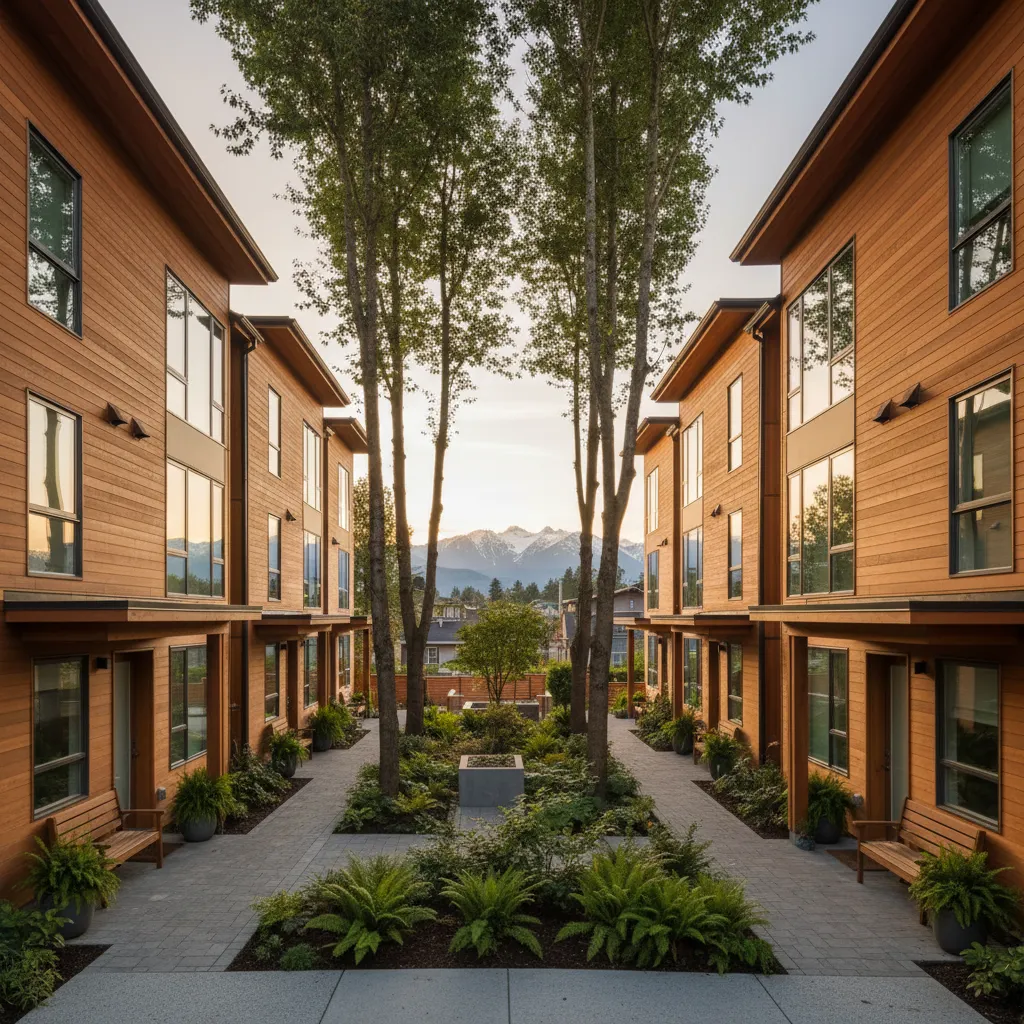
- Detached cluster: Multiple small buildings on one lot sharing a common courtyard
- Mixed configurations: Combining different unit types (e.g., a ground-floor 2-bedroom plus upper-floor 1-bedrooms)
The defining characteristic is that all units sit on one legal parcel of land, typically with strata ownership allowing each unit to be owned separately while sharing common property.
Why Build a Multiplex on Your Single-Family Lot?
Several converging factors make 2026 an ideal time for Vancouver homeowners to consider multiplex development:
Bill 44 Has Unlocked Density
BC’s Small-Scale Multi-Unit Housing Act (Bill 44), implemented in 2024, mandates that nearly all former single-family zones now permit 3-6 unit multiplexes. This represents a fundamental shift in land economics. Your single-family lot, which previously could only support one home, can now accommodate multiple households—dramatically increasing its development value.
Multi-Generational Living is Rising
Vancouver’s housing affordability crisis has made it increasingly difficult for adult children to buy homes in the neighbourhoods where they grew up. At the same time, aging homeowners want to downsize without leaving their communities. Multiplexes solve both problems: grandparents can live steps away from grandchildren, families can share childcare and elder care responsibilities, and everyone stays rooted in familiar neighbourhoods.
Market Dynamics Favour Small-Scale Development
The condo market has seen significant oversupply in 2025-2026, with thousands of presale units struggling to sell. Buyers and developers are pivoting to smaller-scale projects that offer more control, better quality, and family-oriented designs. Multiplexes are perfectly positioned to capture this demand.
You Can Age in Place While Building Wealth
Rather than selling your family home to strangers and relocating to an unfamiliar condo building, you can redevelop your lot into a multiplex, reserve a right-sized unit for yourself, and potentially house your children or grandchildren in the other units. You remain in your neighbourhood, maintain family connections, and unlock hundreds of thousands (or millions) of dollars in equity without leaving.
Two Paths to Building Your Own Multiplex
When it comes to transforming your single-family property into a multiplex, you have two primary options: becoming a developer yourself or partnering with a professional development company.
Option 1: Self-Develop (Become Your Own Developer)
This path gives you complete control over the project but comes with significant risks and responsibilities. As the developer, you’ll need to:
- Secure construction financing (typically requiring 30-40% equity)
- Hire and manage architects, engineers, and contractors
- Navigate municipal permitting and approvals
- Assume all financial risk (cost overruns, delays, market changes)
- Handle on-site hazards (contaminated soil, underground oil tanks, etc.)
- Coordinate inspections, insurance, and warranties
Who this works for: Homeowners with significant construction experience, strong project management skills, substantial liquid capital, and high risk tolerance.
Realistic assessment: Most homeowners are better served by the second option. Unless you have development experience, self-developing is fraught with pitfalls that can cost hundreds of thousands of dollars.
Option 2: Partner with a Professional Developer (Recommended)
This approach involves selling your property to a professional multiplex developer and signing a contract that guarantees you a completed unit (or multiple units) in the finished building. The developer assumes all construction risk, manages the build, secures financing, and handles municipal approvals.
How it works:
- You sell your land to the developer
- The sale contract includes a “reservation clause” guaranteeing you a specific unit(s) in the completed multiplex
- The developer manages all aspects of construction
- Upon completion, you receive title to your reserved unit(s)
- You pay the difference between your land value and the final unit price (often minimal or even positive, depending on the deal structure)
Who this works for: The vast majority of homeowners, especially those seeking multi-generational housing without development expertise.
Key advantage: You eliminate personal liability for construction risks while maintaining input on design, finishes, and layouts through the partnership agreement.
How to Determine Your Property’s Multiplex Development Value
One common misconception: if your single-family home is worth $2 million and you can now build four units, your land must be worth $8 million. Unfortunately, it doesn’t work that way.
Your property’s multiplex development value depends on several factors:
Comparable Sales (Residual Land Value Method)
Professional appraisers determine land value by working backward from finished unit values:
- Estimate the total sale value of all completed units
- Subtract all development costs (construction, soft costs, financing, profit margin)
- What remains is the maximum supportable land value
Example calculation (simplified):
- 4-unit multiplex in Kitsilano
- Estimated unit sale prices: 4 units × $850,000 = $3.4 million total
- Construction costs: $2 million
- Soft costs (15%): $300,000
- Developer profit (15%): $510,000
- Total costs: $2.81 million
- Residual land value: $590,000
In this example, even though the finished units are worth $3.4 million, the supportable land value is only $590,000—not $3.4 million.
Location-Specific Factors
Your property’s actual value will vary based on:
- Neighbourhood desirability: Kitsilano and Mount Pleasant command premium prices; less central areas may see lower values
- Lot size and dimensions: Larger lots (50+ feet wide) can accommodate more units and superior layouts
- Zoning specifics: Some areas allow up to 6 units with density bonuses; others cap at 4
- Site conditions: Flat, rectangular lots with lane access are worth more than steep, irregular properties
Getting a Professional Valuation
Before entering discussions with developers, consult a real estate agent experienced in multiplex transactions. Greyden Douglas and the Rain City Properties team have valued hundreds of multiplex-eligible properties across Vancouver’s West Side and can provide realistic expectations based on current market conditions.
Expect land values to range from $800,000 to $2.5 million depending on neighbourhood, lot size, and development potential. Prime West Side locations (Kerrisdale, Dunbar, South Granville) typically command the highest values.
Choosing the Right Multiplex Developer
Not all developers are created equal, especially in the emerging multiplex sector. Here’s how to identify reputable builders:
Portfolio and Track Record
Start by reviewing the developer’s website for completed projects. Look for:
- Multiplex-specific experience: Have they built 3-6 unit projects, or only large apartment buildings?
- Quality indicators: Professional photography, detailed project descriptions, testimonials from past clients
- Diversity of projects: Single-family homes, laneway houses, small multi-family buildings all demonstrate versatility
Transparency and Site Visits
The best developers invite prospective clients to visit active construction sites. A willingness to show you mid-construction projects is a strong signal of quality workmanship and transparent business practices.
Ask to see:
- Framing and structural work
- Waterproofing and building envelope details
- Finished interior units from recent projects
- How they handle inspections and quality control
If a developer won’t let you see construction in progress, that’s a red flag.
References and Reputation
Request contact information for previous clients, especially those who have completed similar multiplex projects. Ask them:
- Did the project finish on time and on budget?
- How responsive was the developer to concerns or changes?
- Would they work with this builder again?
- Were there any unexpected costs or issues?
Check online reviews, Better Business Bureau ratings, and licensing status with BC Housing and Homeowner Protection Office.
Contract Clarity
A professional developer will provide a clear, detailed contract specifying:
- Your reserved unit’s location, size, and included finishes
- A fixed price or transparent cost-plus structure
- Timeline expectations with milestones
- Your level of decision-making authority (see Limited vs General Partnerships below)
- What happens if timelines or costs change
Never sign a contract without having a real estate lawyer review it first.
Limited Partnership vs General Partnership: Understanding Your Level of Involvement
When partnering with a developer to build a multiplex on your lot, you’ll need to choose between two partnership structures. This decision affects your risk exposure, financial obligations, and control over the project.
Limited Partnership (Recommended for Most Homeowners)
In a limited partnership, you have limited involvement and limited liability. The developer takes on the majority of risk and responsibility.
How it works:
- You contribute the land (sold to the developer)
- You may contribute additional capital if purchasing multiple units
- The developer secures all construction financing
- The developer manages all construction activities
- You provide input on design and finishes as specified in your contract
- Your financial risk is limited to your investment (typically just your land equity)
What you control (as negotiated in your partnership agreement):
- Major design decisions affecting your unit (layout, finishes, fixtures)
- Colour selections and material choices within pre-determined options
- Certain shared amenity decisions (landscaping, common area design)
What you don’t control:
- Day-to-day construction decisions
- Subcontractor selection
- Construction financing terms
- Timeline management (though you receive regular updates)
Who this is for: Homeowners who want a completed multiplex unit without assuming development risk. You remain employed, maintain your life, and let professionals handle construction. This is the right choice for 90%+ of homeowners.
Key advantage: If construction costs overrun or unexpected issues arise (soil contamination, permit delays), the developer absorbs those costs—not you.
General Partnership (High Risk, High Control)
In a general partnership, you’re essentially co-developing the project alongside the professional builder. You have significantly more control but also assume far greater risk.
How it works:
- You and the developer are co-general partners
- You must qualify for construction financing (not just the developer)
- You’re jointly liable for all project costs, overruns, and debts
- You have voting rights on major construction decisions
- You’re legally responsible for contractor payments, liens, and liabilities
What you control:
- All major design and construction decisions
- Subcontractor selection and approval
- Budget allocation and spending decisions
- Final say on finishes, layouts, and amenities (within budget)
The critical risks:
- Financial exposure: If construction costs exceed budget by $300,000, you’re liable for your share (potentially $150,000+ depending on partnership split)
- Lien liability: If the developer fails to pay subcontractors, your property can be liened
- Qualification requirements: You must have sufficient income and credit to qualify for a multi-million-dollar construction loan
- Time commitment: Active participation in weekly construction meetings, decisions, and oversight
Who this is for: Homeowners with significant construction or development experience, very high risk tolerance, substantial liquid capital, and the time to be hands-on throughout the 12-18 month build process.
Important note: If you’re pursuing a general partnership simply to have more design control (e.g., you want a custom kitchen layout), recognize that you’re assuming hundreds of thousands of dollars in potential liability to gain that control. Most design preferences can be accommodated within a limited partnership structure—just negotiate them into your contract upfront.
How Financing a Multiplex Development Works
Financing a multiplex is more complex than a traditional mortgage, but several options exist for Vancouver homeowners.
Land Value as Your Primary Equity
In most partnership structures, your single-family property’s value becomes your primary equity contribution. If your home is worth $1.8 million and you’re buying back a unit valued at $900,000, your land equity covers a significant portion of that cost.
Example scenario:
- Current home value: $1.8 million
- Your reserved unit’s value: $900,000
- Your additional units’ value (for children): $850,000
- Total units you’re purchasing: $1.75 million
- Additional cash required: $0 or minimal
In this example, you might even receive a small cash payment at closing if your land value exceeds your unit purchase costs.
Construction Financing (For General Partnerships)
If you’re entering a general partnership and need to qualify for construction financing, here’s what to expect:
Typical terms:
- Loan-to-cost ratio: 60-70% (meaning you need 30-40% equity)
- Interest rates: Prime + 2-4% (currently ~9-11% as of 2026)
- Loan duration: 12-24 months (construction period + cushion)
- Draw schedule: Funds released in stages as construction milestones are completed
- Personal guarantee: You and co-borrowers sign personally for the debt
Qualification requirements:
- Strong personal income (sufficient to service debt during construction)
- Good credit (typically 680+ score minimum)
- Demonstrated experience or credible partners
- Cash reserves (usually 6+ months of interest payments)
Vancity’s Multiplex Financing Program
Vancity Credit Union has introduced specialized multiplex development financing for BC homeowners building multi-generational housing. Their program offers:
- Competitive rates (typically 0.5-1% better than traditional construction loans)
- Higher loan-to-value ratios (up to 75% in some cases)
- Multi-generational living incentives (reduced rates if units will house family)
- Relationship-based underwriting (more flexibility than big banks)
To qualify, you’ll typically need multiple family members co-signing and demonstrating a genuine multi-generational living plan (not purely investment-driven).
Family Co-Investment and Equity Sharing
For multi-generational projects, it’s common for adult children or extended family to contribute financially in exchange for ownership stakes.
How to structure family co-investment:
- Determine total project costs: Land value + construction costs + soft costs + financing
- Allocate ownership shares: Who’s contributing what (land, cash, sweat equity)
- Formalize agreements: Work with a lawyer to draft a partnership or co-ownership agreement
- Clarify decision-making: Who has voting rights on design, construction, and financial decisions
- Plan for contingencies: What happens if someone wants to sell their share later?
Example family structure:
- Parents contribute land ($1.8M value)
- Daughter contributes $300K cash
- Son contributes $200K cash
- Total value: $2.3M
- Ownership split: Parents 78%, Daughter 13%, Son 9%
- Each receives a unit; remaining equity is distributed proportionally if units are sold later
Get this in writing before construction begins. Family disputes over money are common—clear documentation prevents them.
Working with Mortgage Brokers
Before committing to any development path, consult a mortgage broker experienced in multiplex financing. They can:
- Pre-qualify you for construction loans
- Connect you with lenders offering multiplex-specific programs
- Structure financing to minimize interest costs during construction
- Advise on whether limited or general partnership makes sense based on your financial profile
Greyden Douglas works closely with several Vancouver mortgage brokers who specialize in multiplex financing and can provide referrals to Rain City Properties clients.
Timeline Expectations: How Long Will Building a Multiplex Take?
One of the most common questions homeowners ask is: “How long until I can move into my new multiplex?” The answer depends on several factors, but here’s a realistic breakdown.
Phase 1: Pre-Construction (4-8 Months)
This phase begins after you’ve signed a contract with a developer and ends when construction permits are issued.
Key activities:
- Architectural design and revisions (2-3 months)
- Engineering reports (geotechnical, structural, civil)
- Municipal permit applications submitted (1-2 months after design completion)
- Permit review and approval by city (2-4 months, depending on municipality)
During this phase, you’re still living in your home. You don’t need to move out until permits are issued and demolition/construction is about to begin.
Vancouver-specific timelines:
- City of Vancouver: 4-6 months for straightforward multiplex permits (faster with pre-approved designs)
- Burnaby: 6-9 months (currently slower due to bylaw revisions)
- North Vancouver: 3-5 months (streamlined SSMUH approval process)
Phase 2: Construction (12-18 Months)
Once permits are issued, you’ll move to temporary housing and construction begins.
Typical construction timeline:
- Demolition of existing home: 1-2 weeks
- Excavation and foundation: 4-6 weeks
- Framing and structural: 8-12 weeks
- Rough-ins (electrical, plumbing, HVAC): 6-8 weeks
- Exterior finishing and waterproofing: 6-8 weeks
- Interior finishing (drywall, flooring, paint, cabinets): 8-12 weeks
- Final inspections and occupancy permit: 2-4 weeks
Total construction: 12-18 months depending on project complexity, weather, supply chain issues, and inspection scheduling.
Factors that extend timelines:
- Complex designs (curved walls, custom millwork)
- Supply chain delays (windows, appliances, specialty materials)
- On-site discoveries (contaminated soil, unexpected rock)
- Inspector scheduling bottlenecks
- Winter weather (rain delays in Vancouver are common)
Phase 3: Final Occupancy and Strata Setup (1-2 Months)
After construction is complete, there’s a brief period for final inspections, strata formation, and move-in preparation.
Key activities:
- Final occupancy inspections
- Strata plan registration with Land Title Office
- Strata council formation and first meeting
- Final unit walk-throughs and deficiency lists
- Move-in coordination
Total Timeline: 18-28 Months (1.5-2.5 Years)
From signing your development agreement to moving into your completed multiplex, expect 18-28 months. Projects in municipalities with faster permitting (Vancouver, North Vancouver) trend toward the shorter end; projects with complex designs or in slower municipalities (Burnaby, Richmond) trend longer.
Plan your temporary housing accordingly: Most homeowners arrange 2-year rental accommodations to avoid the stress of short-term extensions.
Living Arrangements During Construction
You’ll need temporary housing for 12-18+ months while your multiplex is under construction. Here’s how to plan effectively.
When to Move Out
You don’t move out immediately after signing your development agreement. Instead, you remain in your home during the entire pre-construction phase (design, permitting, approvals). Only when permits are issued and demolition is scheduled do you need to vacate—typically giving you 30-60 days’ notice.
Typical notice period: Your development contract should specify that the developer provides at least 30 days’ written notice before you must vacate. Use this time to secure temporary housing and coordinate your move.
Temporary Housing Options
Option 1: Long-term rental
- Rent a home or apartment for 18-24 months
- Pros: Stability, no risk of short-term extensions
- Cons: More expensive, requires full setup
Option 2: Extended-stay suite/hotel
- Short-term furnished rental or extended-stay hotel
- Pros: Fully furnished, flexible
- Cons: Expensive, less homelike, limited for families
Option 3: Stay with family
- Live with adult children or relatives
- Pros: Minimal cost, maintains family connection
- Cons: Loss of privacy, potential strain on relationships
Option 4: Purchase a temporary home
- Buy a small condo or townhome as interim housing, sell after completion
- Pros: Builds equity, full control
- Cons: Transaction costs, market risk, complexity
Who Pays for Temporary Housing?
In most development agreements, you are responsible for your own temporary housing costs. However, some developers offer:
- Rental allowances (e.g., $2,000-3,000/month credited toward your final unit cost)
- Developer-owned temporary units you can rent at below-market rates
- Payment deferrals to help cover temporary housing
Negotiate these terms upfront—they’re not standard but can be included in your partnership agreement.
Storage Considerations
You’ll likely need to put furniture and belongings in storage during construction. Budget for:
- Storage unit rental: $200-500/month (depending on size)
- Moving costs: $1,500-3,000 (move out to storage, then storage to new home)
- Insurance: Ensure your storage unit is covered
Some developers offer on-site storage containers, but this is rare and depends on lot size.
Strata Management and Moving into Your Completed Multiplex
Your new multiplex will be registered as a strata corporation, similar to a condo building. Understanding how strata management works is essential for smooth multi-generational living.
What is a Strata?
A strata is a legal ownership structure where you own your individual unit (“strata lot”) plus a proportional share of common property (roof, structure, landscaping, shared amenities). Each owner pays monthly strata fees to cover:
- Building insurance
- Maintenance and repairs of common property
- Landscaping and gardening
- Contingency reserve fund (for major future repairs)
- Property management fees (if you hire a professional manager)
Forming Your Strata Council
Within the first few weeks of occupancy, you and your fellow owners will need to form a strata council. This is the governing body that makes decisions about the building’s operation.
Key steps:
- First annual general meeting (AGM): Required within 6-12 months of strata registration
- Elect council members: Typically 3-5 owners (president, vice president, treasurer, secretary)
- Adopt bylaws: Customize strata rules for your specific building
- Set strata fees: Determine monthly contributions based on budget needs
- Hire property manager (optional but recommended)
Should You Hire a Professional Property Manager?
For most multiplex stratas, hiring a licensed property manager is highly recommended, even for family-only buildings.
What a property manager does:
- Collect strata fees and manage finances
- Coordinate maintenance and repairs
- Arrange insurance renewals
- Handle emergency issues (plumbing leaks, heating failures)
- Organize AGMs and council meetings
- Keep financial records and file required paperwork
Cost: $150-300/month for a 4-6 unit multiplex (split among all owners via strata fees)
Why it’s worth it: Even in family-only buildings, having a neutral third party manage finances and maintenance prevents conflicts. No one wants to chase their daughter for unpaid strata fees or argue with their father about who should pay for a new roof.
Setting Strata Fees
Your monthly strata fees will cover ongoing building expenses. For a typical 4-unit multiplex in Vancouver, expect:
Annual operating budget (example):
- Building insurance: $3,000-5,000
- Landscaping/gardening: $2,000-4,000
- Utilities (shared water, garbage): $1,500-2,500
- Property management: $2,400-3,600
- Reserve fund contribution: $3,000-6,000
- Miscellaneous (repairs, supplies): $1,000-2,000
- Total annual: $13,000-23,000
Monthly strata fee per unit: $270-480/month (assuming 4 units)
These fees are in addition to your mortgage payment, property taxes, and unit-specific utilities.
Multi-Generational Living: Special Considerations
When family members share a multiplex strata, additional considerations arise:
1. Financial contributions: If adult children have less income, consider graduated strata fee structures (though this must be approved by all owners and formalized in bylaws)
2. Decision-making: Establish clear protocols for shared decisions (e.g., requiring unanimous consent for major expenditures over $5,000)
3. Shared space rules: Define who can use common areas when, guest parking allocation, and noise expectations
4. Future sale provisions: Include right-of-first-refusal clauses in your strata bylaws so family members can buy out departing owners before external sales
5. Conflict resolution: Designate a neutral mediator (family friend, lawyer, professional mediator) who can resolve disputes without destroying family relationships
Get these agreements in writing before move-in—they’re much harder to negotiate after conflicts arise.
Common Pitfalls to Avoid
Having helped dozens of Vancouver families through multiplex development, here are the most common mistakes to avoid:
1. Underestimating Total Costs
Construction budgets are estimates, not guarantees. Build in a 10-15% contingency for:
- On-site surprises (contaminated soil, bedrock, underground obstructions)
- Material cost increases during construction
- Design changes you request mid-build
- Permit delays extending financing costs
2. Choosing a Developer Based Solely on Price
The lowest bid is often the riskiest. Cut-rate developers may:
- Use inferior materials
- Hire inexperienced subcontractors
- Cut corners on waterproofing and building envelope
- Lack proper insurance or licensing
Spend more for a reputable builder with a proven track record. Your multiplex is a 50+ year investment—build it right.
3. Not Having Family Conversations Early
If you’re building for multi-generational living, involve all stakeholders from day one. Discuss:
- Who’s contributing financially and how much
- What ownership stakes look like
- Design preferences (unit sizes, layouts, finishes)
- Living arrangements (privacy, shared spaces, noise tolerance)
- Long-term plans (what happens when parents pass away or kids want to sell)
Family conflicts over money and housing destroy relationships. Prevention through open communication is essential.
4. Ignoring Strata Governance
Failing to establish strong strata governance from day one leads to:
- Deferred maintenance (owners avoiding expense decisions)
- Underfunded reserve accounts (no money when the roof needs replacement)
- Owner conflicts (disputes over repairs, noise, parking)
Set up professional property management from the start, even if it feels unnecessary for a small family building. It’s insurance against future headaches.
5. Overbuilding for Your Market
If you’re in a neighbourhood where $1.2 million is the top end for unit prices, don’t build $1.5 million luxury units. You won’t recoup your investment.
Match your finishes and unit sizes to realistic market expectations. Save the heated floors and Miele appliances for locations where buyers will pay for them (Kitsilano, Kerrisdale, Point Grey). In more affordable areas (East Vancouver, Burnaby), focus on functional, durable finishes.
6. Not Lining Up Financing Early
Don’t assume you can secure financing when you need it. Interest rates, lending policies, and your personal financial situation can change during the 6+ month pre-construction period.
Get pre-approved for construction financing before signing a development agreement. If you can’t qualify, you’ll need to adjust your plans (e.g., switch to limited partnership instead of general partnership).
How Rain City Properties and Greyden Douglas Can Help
Building a multiplex on your single-family lot is complex, but you don’t have to navigate it alone. Rain City Properties specializes in connecting Vancouver homeowners with trusted multiplex developers and guiding families through every step of the process.
Builder Connections You Can Trust
With nearly 20 years in Vancouver real estate and deep relationships with the city’s top builders and developers, Greyden Douglas has pre-vetted a network of multiplex specialists who deliver quality work on time and on budget.
We connect you with developers who:
- Have proven track records on 3-6 unit projects
- Specialize in multi-generational housing
- Offer transparent limited partnership agreements
- Provide fair land valuations based on current market conditions
- Maintain proper licensing, insurance, and warranties
Realistic Property Valuations
Before you commit to a developer or partnership structure, you need to know what your property is truly worth for multiplex development. We provide:
- Comparative market analysis of recent multiplex land sales in your neighbourhood
- Feasibility assessments based on lot size, zoning, and site conditions
- Realistic unit sale price projections
- Developer profit margin transparency (so you understand what you’re getting)
This isn’t about inflating your expectations—it’s about giving you accurate information so you can make informed decisions.
Neighbourhood Expertise
Every Vancouver neighbourhood has unique characteristics that affect multiplex feasibility and value. We provide granular, street-level insights for Kitsilano, Mount Pleasant, Kerrisdale, Dunbar, Cambie Corridor, and other West Side areas where we specialize.
Want to know whether your specific lot can support 4 or 6 units? Whether setback requirements will constrain your buildable area? How much comparable units are selling for on your block? We have those answers.
Family-First Guidance
Multi-generational living projects are as much about family dynamics as they are about construction logistics. We help families:
- Facilitate conversations about financial contributions and ownership
- Recommend family lawyers who specialize in co-ownership agreements
- Connect you with mortgage brokers experienced in family-financed projects
- Provide realistic expectations about strata living with relatives
We’ve seen what works and what doesn’t. Our goal is to help you build a home that keeps your family together—not drives them apart.
Full-Service Support Through Completion
From initial property valuation through final move-in, Rain City Properties stays with you:
- Pre-development: Property valuation, developer selection, contract review
- Design phase: Reviewing architectural plans, connecting you with designers
- Construction: Periodic site visits, ensuring milestones are met
- Completion: Strata setup guidance, property management referrals, move-in coordination
We’re not just real estate agents—we’re your advocates throughout a multi-year process.
Key Takeaways
- Bill 44 has unlocked multiplex potential on virtually all Vancouver single-family lots, creating opportunities for multi-generational housing
- Partnering with a professional developer (limited partnership) is safer and more practical than self-developing for most homeowners
- Your land value is not proportional to unit count—expect realistic valuations based on residual land value calculations
- Choose developers based on track record, transparency, and references—not lowest price
- Limited partnerships minimize risk while allowing design input; general partnerships expose you to significant financial liability
- Financing options include land equity, construction loans, Vancity programs, and family co-investment—consult a mortgage broker early
- Timelines average 18-28 months from contract signing to move-in; plan temporary housing for 2 years to avoid stress
- Strata management is essential—hire a professional property manager even for family-only buildings to prevent conflicts
- Common pitfalls include underestimating costs, choosing cheap builders, ignoring family conversations, and weak strata governance
Frequently Asked Questions
How much does it cost to build a multiplex in Vancouver in 2026?
Total project costs for a 4-unit multiplex in Vancouver typically range from $3.5-7 million, including land acquisition ($1-2.5M depending on neighbourhood), construction ($2-4M at $350-500/sq ft), soft costs ($300-600K for permits, engineering, legal, financing), and municipal fees ($50-150K). If you already own the land, your out-of-pocket costs are primarily construction and soft costs, often offset by your land equity if you’re partnering with a developer.
Can I build a multiplex if I have a mortgage on my current home?
Yes, but you’ll need to work with your lender and the developer to structure the transaction properly. In most limited partnerships, the developer purchases your property (paying off your existing mortgage), then you buy back a completed unit using your land equity as down payment. If you’re entering a general partnership and need construction financing, you’ll need to qualify for new loans, and your existing mortgage will factor into your debt-to-income ratios. Consult a mortgage broker experienced in multiplex financing before proceeding.
What neighbourhoods in Vancouver are best for multiplex development in 2026?
The most promising neighbourhoods for multiplex development combine strong market demand, favourable zoning, and reasonable land costs. Top areas include Kitsilano (high rental and sales demand, near UBC and beaches), Mount Pleasant (young families, near SkyTrain, strong appreciation), Grandview-Woodland (emerging area, more affordable land), Cambie Corridor (future SkyTrain expansion), and Kerrisdale (family-oriented, strong schools). West Side locations generally command premium prices but also have higher land costs, while East Side neighbourhoods offer better ROI for some buyers.
How do I choose between a limited and general partnership?
Choose a limited partnership if you want a completed multiplex unit without assuming construction risk, development experience, or the time to manage a build actively. This is the right choice for 90%+ of homeowners. Choose a general partnership only if you have significant construction experience, very high risk tolerance, can qualify for construction financing, and want complete control over every decision. General partners assume personal liability for all project costs, overruns, and debts—potentially hundreds of thousands of dollars in additional exposure. Unless you’re a developer yourself, limited partnership is the safer route.
Will I pay capital gains tax if I build a multiplex on my principal residence?
If your current single-family home is your principal residence and you plan to occupy a unit in the completed multiplex as your principal residence, you generally can defer capital gains tax under CRA’s principal residence exemption. However, the rules are complex, especially if you’re selling units to family members or third parties, or if you’ve used the property for income purposes (renting out basement suites, etc.). Consult a tax accountant experienced in real estate before proceeding—tax planning can save you tens of thousands of dollars.
How long does it take to build a multiplex in Vancouver from start to finish?
From signing a development agreement to moving into your completed multiplex, expect 18-28 months (1.5-2.5 years). This includes 4-8 months for design and permitting (during which you’re still living in your current home) and 12-18 months of construction (during which you’ll need temporary housing). Vancouver and North Vancouver have faster permitting timelines (4-6 months); Burnaby and Richmond tend toward 6-9 months. Complex designs, supply chain delays, or on-site discoveries (contaminated soil, bedrock) can extend construction timelines.
Next Steps: Start Your Multiplex Journey with Expert Guidance
Building a multiplex on your Vancouver property is one of the most significant financial and lifestyle decisions you’ll make. Whether you’re creating a multi-generational home to keep your family together or maximizing your property’s development value, having experienced guidance makes all the difference between a successful project and a costly mistake.
Greyden Douglas and the Rain City Properties team specialize in helping Vancouver homeowners navigate multiplex development from initial property valuation through final move-in. With nearly 20 years of local expertise and deep connections to the city’s top builders and developers, we provide the insights, referrals, and advocacy you need for a successful project.
Ready to explore your property’s multiplex potential? Contact Greyden Douglas directly at (604) 345-9977 or book a consultation to discuss your specific property, neighbourhood considerations, and family goals. We’ll provide a realistic valuation, connect you with trusted developers, and guide you through every step of the process.
Want to learn more about multiplex investment opportunities first? Visit our multiplex zoning guide for comprehensive information on Vancouver’s R1-1 regulations and development requirements.
Your family’s future starts with a single conversation. Let’s make multi-generational living a reality.