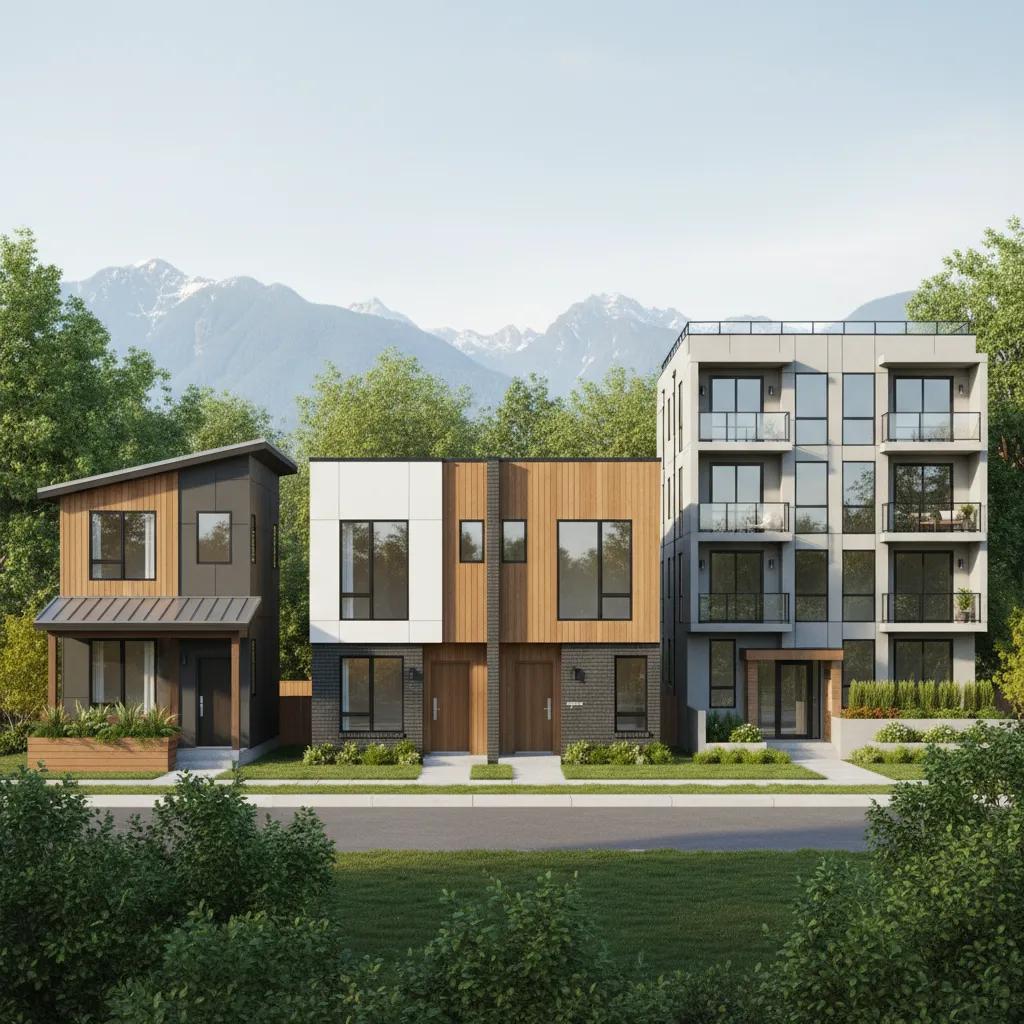
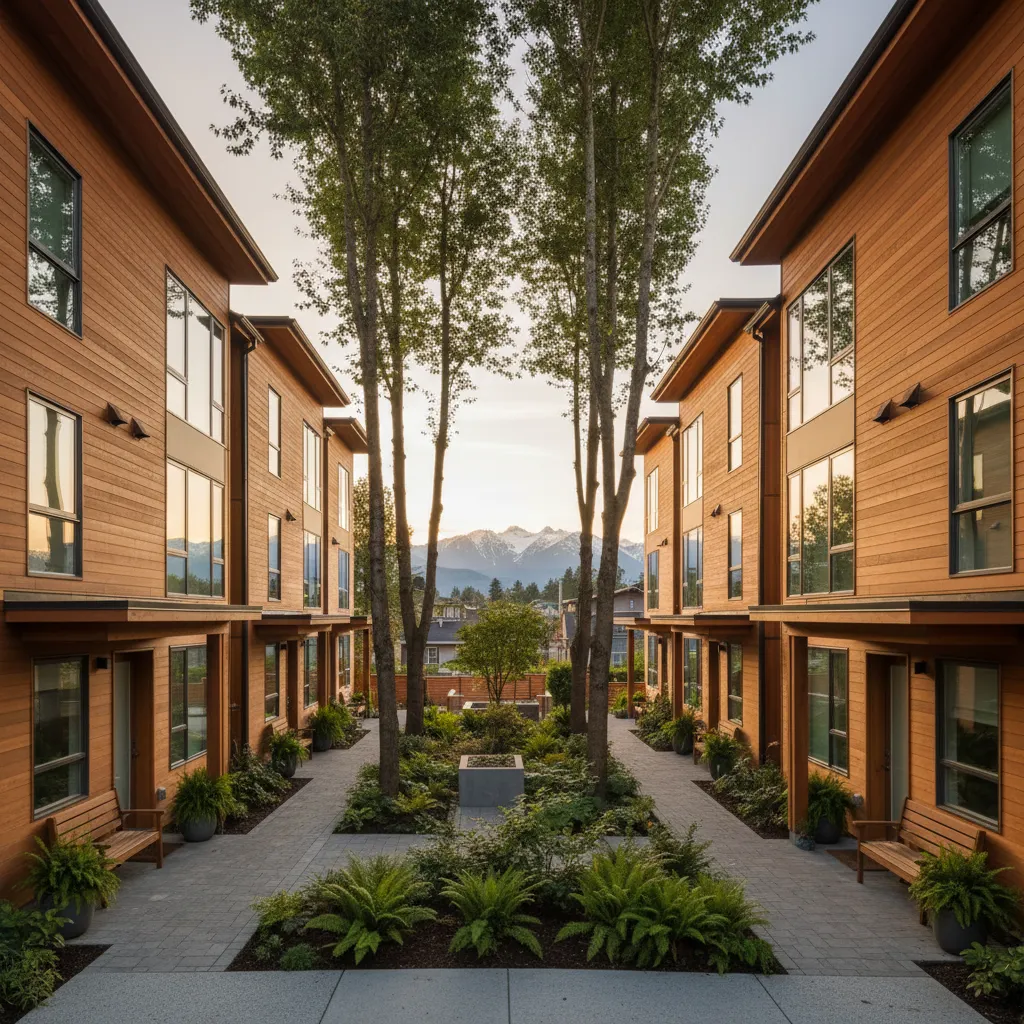
Own a single-family lot in Vancouver? Bill 44 has unlocked unprecedented wealth-building opportunities. Here are five compelling reasons why building a multiplex on your property could be the smartest financial decision you make in 2026.
If you own a single-family home in Vancouver, your property is worth more today than it was two years ago—and not just because of market appreciation. Bill 44 fundamentally changed what you’re allowed to build on your lot, unlocking value that was previously impossible to access without lengthy rezoning battles.
After helping dozens of Vancouver homeowners navigate multiplex development, I’ve identified five compelling reasons why building on your own lot makes sense in 2026.
1. Unlock Hidden Equity You Didn’t Know You Had
Your single-family lot isn’t just land with a house on it anymore. Under Bill 44’s Small-Scale Multi-Unit Housing (SSMUH) provisions, most Vancouver lots can now support 4-6 units by right—no rezoning required.
This shift from “residential use” to “development potential” changes the fundamental economics of your property.
The Math That Matters:
A typical 50’ x 120’ lot in Kitsilano might be worth $2.2 million as a single-family home based on comparable sales. But that same lot, evaluated as a development site capable of supporting a 4-unit multiplex worth $6.5 million at completion, has a residual land value of $2.8-3.2 million.
That’s $600,000 to $1 million in hidden equity sitting under your house right now.
The difference? Understanding that your property’s highest and best use has changed. Traditional real estate valuation methods miss this entirely—they compare your house to other houses, not your lot to development opportunities.
What This Means for You:
- Your property has likely appreciated 20-40% beyond what Zillow or BC Assessment shows
- Developers already know this (which is why you’re getting unsolicited offers)
- Capturing that value requires thinking like an investor, not a homeowner
2. Create Passive Income That Outlasts Your Career
Building a multiplex doesn’t mean selling and walking away. Many of my clients keep one or more units as long-term rentals, creating income streams that continue for decades.
The Rental Reality in Vancouver:
Current market rents for new multiplex units in desirable neighbourhoods:
| Unit Type | Monthly Rent | Annual Income |
|---|---|---|
| 1-bedroom | $2,200-2,600 | $26,400-31,200 |
| 2-bedroom | $3,000-3,600 | $36,000-43,200 |
| 3-bedroom | $4,200-5,000 | $50,400-60,000 |
A homeowner who builds a 4-unit multiplex and retains two rental units could generate $72,000-$100,000+ in annual rental income—enough to fund retirement, cover a child’s education, or reinvest in additional properties.
Why New Construction Commands Premium Rents:
New multiplex units aren’t competing with 1970s rental stock. They offer:
- Modern layouts with open-concept living
- In-suite laundry
- Energy-efficient construction (lower utility costs for tenants)
- Contemporary finishes tenants pay premium for
- Private entrances in many configurations
These units rent faster and retain tenants longer than older inventory, reducing vacancy and turnover costs.
3. Keep Family Close Without Sacrificing Privacy
Vancouver’s housing crisis isn’t just about affordability for strangers—it’s making it impossible for families to stay together in the same neighbourhood.
A multiplex solves the multi-generational housing challenge elegantly.
Common Family Configurations:
- Parents + Adult Children: You live in the main unit, adult kids get their own space at below-market rent while saving for their own home
- Aging Parents: Ground-level accessible unit for parents who need to downsize but want to stay close
- Extended Family: Grandparents, parents, and young family all under one roof (technically under separate roofs with shared outdoor space)
- Rental + Family Hybrid: Two units for family, two units generating income to offset construction costs
The Privacy Advantage:
Unlike basement suites or laneway houses that share outdoor space awkwardly, well-designed multiplexes give each unit:
- Separate entrances (often ground-level)
- Dedicated outdoor space (patios, balconies, or yard sections)
- Sound separation between units
- Independent mechanical systems
Your adult daughter can have dinner with you on Sunday and not see you again until next Sunday—if that’s what works for your family.
Financial Benefits of Family Occupancy:
When family members occupy units, you may be able to:
- Claim principal residence exemption on your primary unit
- Charge below-market rent without CRA issues (fair market value rules have exceptions for family)
- Avoid landlord-tenant regulatory complexity
- Maintain flexibility for future changes
4. Future-Proof Against Market Uncertainty
Real estate markets cycle. Interest rates fluctuate. Economic conditions change. A multiplex provides resilience that single-family homes simply can’t match.
Diversified Income Streams:
If you own a single-family home, your entire real estate wealth is tied to one asset class in one location. A multiplex diversifies that:
- Multiple rental income sources: If one tenant leaves, you still have income from other units
- Mixed-use potential: Some configurations allow home-based business use
- Strata subdivision option: You can sell individual units if you need liquidity
- Live-in-one, rent-the-rest flexibility: Adjust your strategy as circumstances change
Downside Protection:
In a market downturn, multiplex properties tend to hold value better than single-family homes because:
- Income-producing assets attract investors even when owner-occupier demand softens
- Cap rate compression: Investor buyers value cash flow, providing a floor on prices
- Rental demand increases during economic uncertainty (people rent instead of buy)
- Supply constraints: Vancouver’s limited land means well-located multiplexes remain scarce
Inflation Hedge:
Real estate has historically been one of the best inflation hedges, and rental properties doubly so:
- Property values tend to rise with inflation
- Rents typically increase with inflation
- Fixed-rate mortgage payments become relatively cheaper as inflation erodes the real value of debt
5. Take Advantage of 2026’s Favourable Conditions
Timing matters in real estate development. Several factors make 2026 an optimal window for multiplex construction in Vancouver.
Construction Costs Have Stabilized:
After pandemic-era volatility (lumber prices tripled, labor costs spiked), construction costs have normalized:
- Lumber prices down 60% from 2021 peaks
- Supply chain disruptions largely resolved
- Labor availability improving as immigration increases
- Material costs stabilizing or declining in real terms
Current hard costs for multiplex construction in Vancouver: $350-$450 per square foot, down from $450-$550 at peak.
Financing Environment Improving:
The Bank of Canada’s rate cuts have improved construction financing terms:
- Construction loan rates: 6.5-8% (down from 8-10% in 2023)
- Permanent financing available at 5-6% upon completion
- CMHC’s MLI Select program offers favourable terms for rental construction
Builder Capacity Available:
During the development boom of 2021-2022, finding quality builders was nearly impossible. Today:
- Experienced multiplex builders have capacity
- Competitive bidding drives better pricing
- Timelines more predictable (18-24 months vs. 24-36 months previously)
Regulatory Clarity:
Bill 44 is now 18+ months old. Municipal implementation is largely complete:
- Permit processes established
- Design guidelines clarified
- Precedents set by early adopters
- Fewer surprises and delays
The Window Won’t Stay Open Forever:
As more homeowners recognize multiplex potential:
- Construction costs will rise with demand
- Builder capacity will tighten
- Land values will fully price in development potential
Early movers capture the most value.
Key Takeaways
- Your single-family lot likely has $600K-$1M+ in hidden equity as a development site
- Rental income from retained units can generate $72K-$100K+ annually
- Multiplex configurations solve multi-generational housing challenges with privacy
- Diversified income streams provide resilience against market uncertainty
- 2026 offers favourable construction costs, financing, and builder availability
Frequently Asked Questions
How much does it cost to build a multiplex in Vancouver?
Total project costs for a 4-6 unit multiplex in Vancouver typically range from $1.8-$3.5 million depending on lot size, unit count, and finish level. This includes demolition ($30-50K), construction ($350-450/sq ft), soft costs (permits, engineering, legal—typically 15-20% of hard costs), and financing costs. Your existing land equity offsets much of this.
Can I live in one unit while renting the others?
Absolutely. This is one of the most popular configurations. You occupy one unit as your principal residence (maintaining PRE eligibility on that unit) while generating rental income from remaining units. Many clients find rental income covers or exceeds their construction financing costs.
How long does multiplex construction take?
From permit application to occupancy, expect 24-30 months total: 6-9 months for permits and approvals, 18-24 months for construction. Well-organized projects with experienced builders can compress timelines to 20-24 months total.
Do I need to move out during construction?
Yes. Your existing home will be demolished to build the multiplex. Most clients rent nearby during construction (factor $3,000-5,000/month for 18-24 months into your planning). Some negotiate temporary housing as part of builder partnerships.
What if I don’t want to be a landlord?
You have options: (1) Sell all units upon completion and walk away with profits, (2) Hire a property management company to handle rental operations (typically 8-10% of rent), or (3) Structure a partnership where the developer handles ongoing management.
Next Steps: Explore Your Lot’s Potential
If you own a single-family lot in Vancouver, Burnaby, or the North Shore, you likely have development potential you haven’t fully explored. The first step is understanding what your property could become—and what that transformation is worth.
I offer complimentary property assessments for homeowners considering multiplex development. In 30 minutes, we’ll review:
- Your lot’s development potential under current zoning
- Preliminary financial projections (costs, values, returns)
- Partnership options if you don’t want to develop alone
- Timeline and process overview
No obligation. No pressure. Just clarity on your options.
Contact Greyden Douglas directly at (604) 218-2289 or book a call to discuss your Vancouver real estate goals.